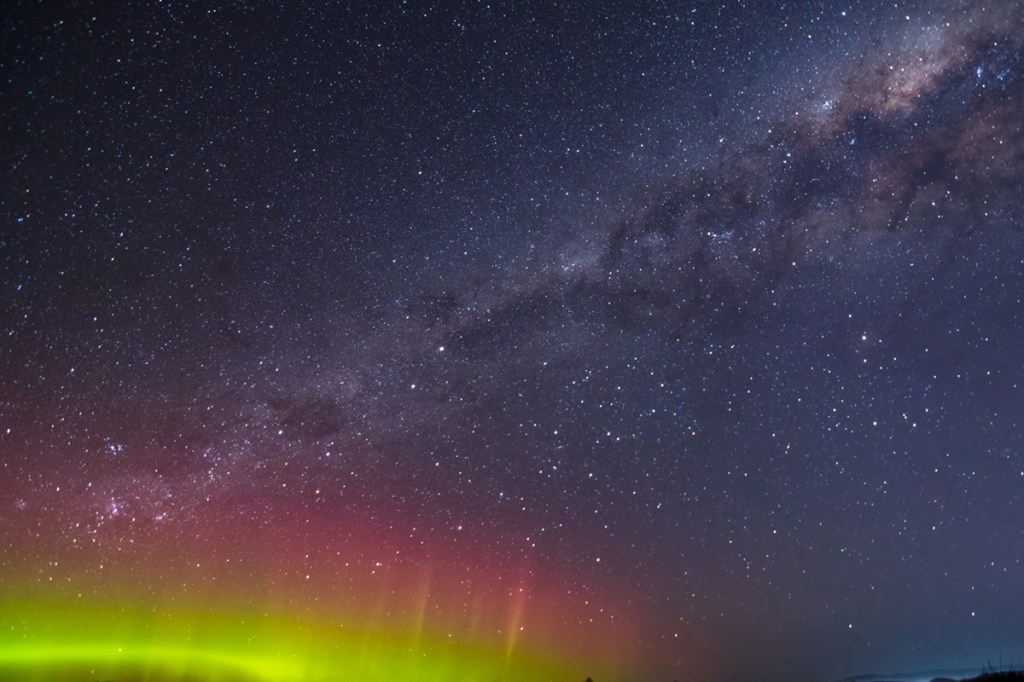
Aurora is a breathtaking natural light show in the sky.
The ions which stream from the sun’s surface are called Solar Wind. When the solar wind meets Earth’s magnetic field, most ions are blocked by the magnetosphere. Some ions are trapped at the Earth’s geomagnetic poles and collide with the oxygen and nitrogen atoms from the atmosphere. The energy released from these collisions causes the colorful glowing lights around the poles.
When the ions collided with nitrogen, they produced red and bluish light. The strikes with hydrogen and helium gave off the blue and purple hue. The most common is the green-yellow aurora, which is from the collision of oxygen at lower altitudes. A red glow happens when the ions strike with oxygen at a higher atmosphere.
In the north, these light display is called “Aurora Borealis” or “the northern lights.” At the south pole, it is known as “Aurora Australis” or “the southern lights.”
Tasmania is one of the few places in the southern hemisphere to witness the Aurora Australis. Winter month is the best time to chase the aurora. But in fact, the southern lights can be seen all year round in Tasmania. Cloud and moon are important factors. Cloudy days obstruct the light display, and the moonlight can overshine the aurora.
Prior to Tasmania, we joined the Facebook group “Aurora Australis Tasmania” to get more information, including the latest aurora display alert. We saw the Aurora Australis twice during our three weeks holidays in 2022.
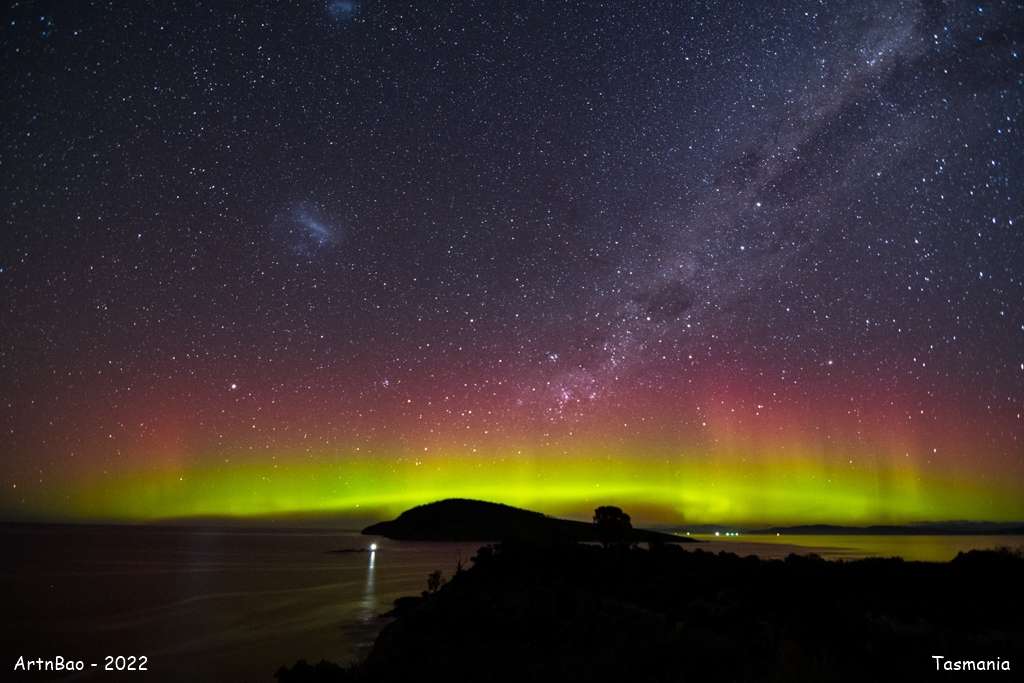
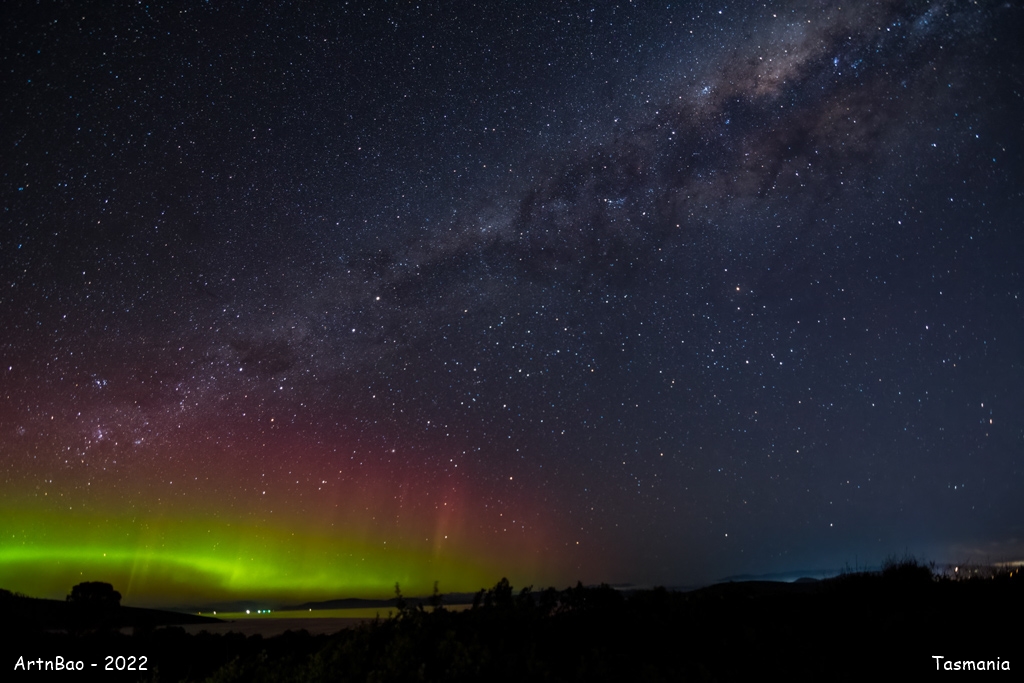
Our very first Aurora Australis is at Goat Bluff Lookout. The clear night sky and south-facing lookout point are perfect conditions for witnessing the light. Our naked eye can only see a bit of white glow shifting and transforming in the sky. Using a DSLR camera, we can capture the color and beauty of the Aurora Australis.
Camera setting
- White Balance : Manual (to 3K to 3.5K)
- Aperture : F2.8
- ISO : 3200 or below
- Shutter Speed : half a second to 30sec, depending on Aurora intensity (lower/static : 30sec – some intensity : 3 to 8sec – faster/intense : 0.5 to 3sec)
- Raw
Goat Bluff Lookout on 27th August 2022
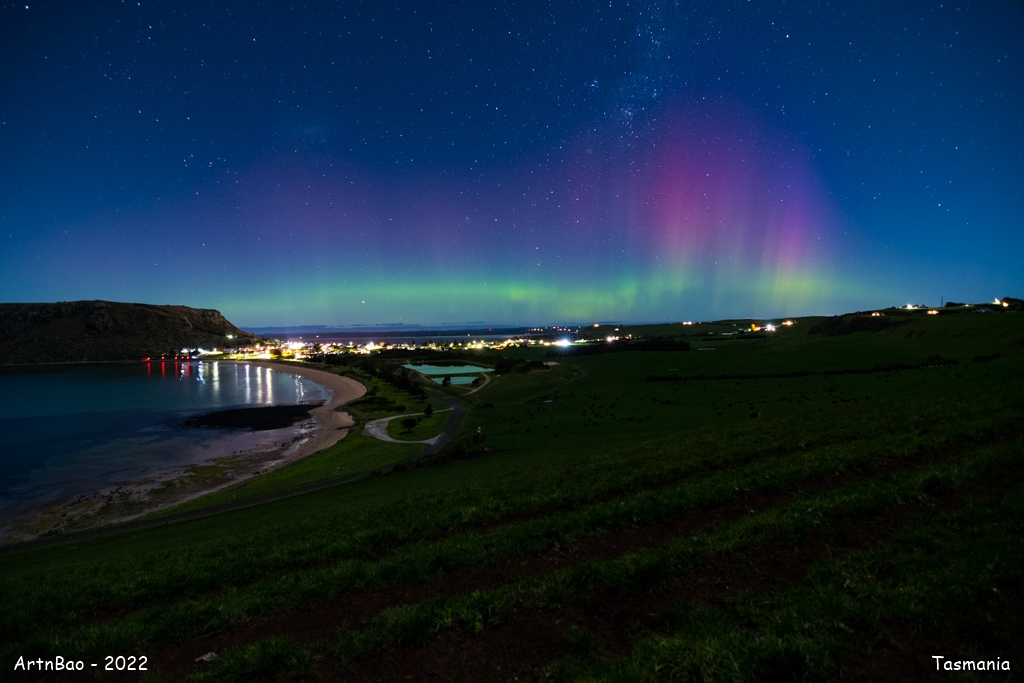
Another Aurora Australis at Stanley on 4th September 2022
 Art Bao Globe