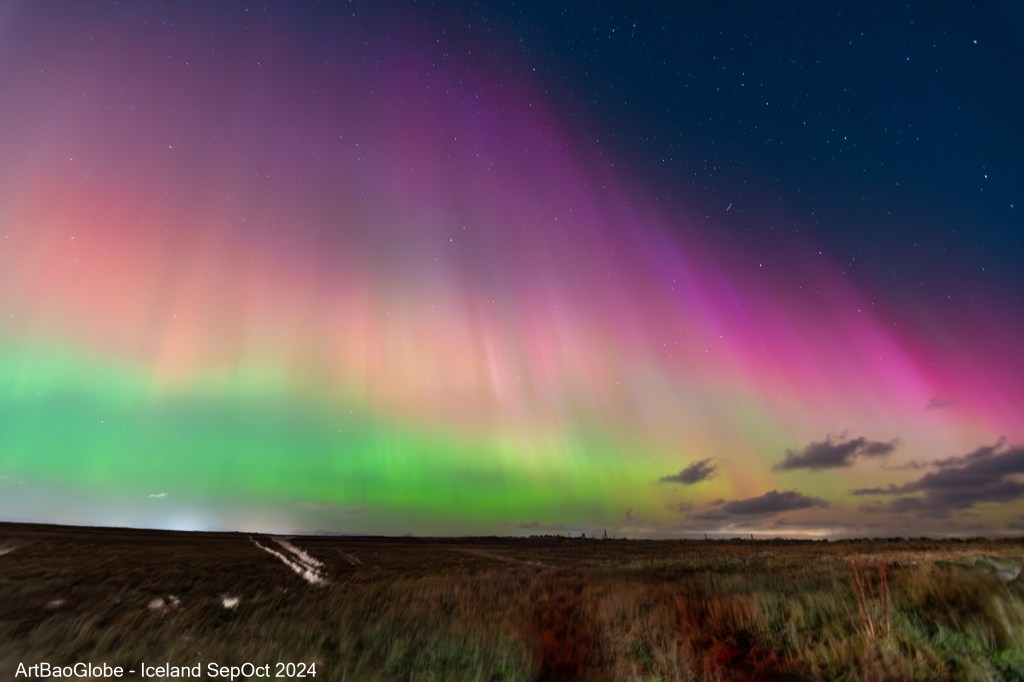
Auroras are created when energetic, electrically charged particles from the sun interact with Earth’s magnetic field and atmosphere. The sun constantly releases these particles as the solar wind. During solar storms, the solar wind becomes stronger and denser, carrying more energy toward Earth.
Our planet is surrounded by a protective magnetic field that acts like a giant shield, deflecting most of the solar wind. However, near the polar regions, the magnetic field lines are weaker and funnel-shaped. Here, charged solar particles slip through and are guided down into the upper atmosphere. As they spiral along these magnetic field lines and collide with gases high above Earth, oxygen and nitrogen atoms absorb the energy. When they release it again, they glow, painting the night sky with brilliant light.
Auroras appear most often in high-latitude regions. In the northern hemisphere, they are called the Aurora Borealis or Northern Lights. In the southern hemisphere, they are known as the Aurora Australis or Southern Lights.
The most common aurora color is green, produced by oxygen at lower altitudes where it is more abundant. During periods of intense solar activity, auroras can glow red, formed higher up in the atmosphere where oxygen is thinner. When green and red overlap, the lights appear yellow. Blue and purple hues are created by nitrogen at lower altitudes, often during powerful solar storms.
The shapes of auroras are as mesmerizing as their colors. Because the charged particles follow Earth’s magnetic field lines, auroras form vaious patterns:
- Arcs : long, smooth ribbons stretching across the sky
- Curtains/Bands : shimmering, wavy sheets that look like glowing drapes
- Rays : vertical streaks of light shooting upward, formed when particles move nearly parallel to the magnetic field lines
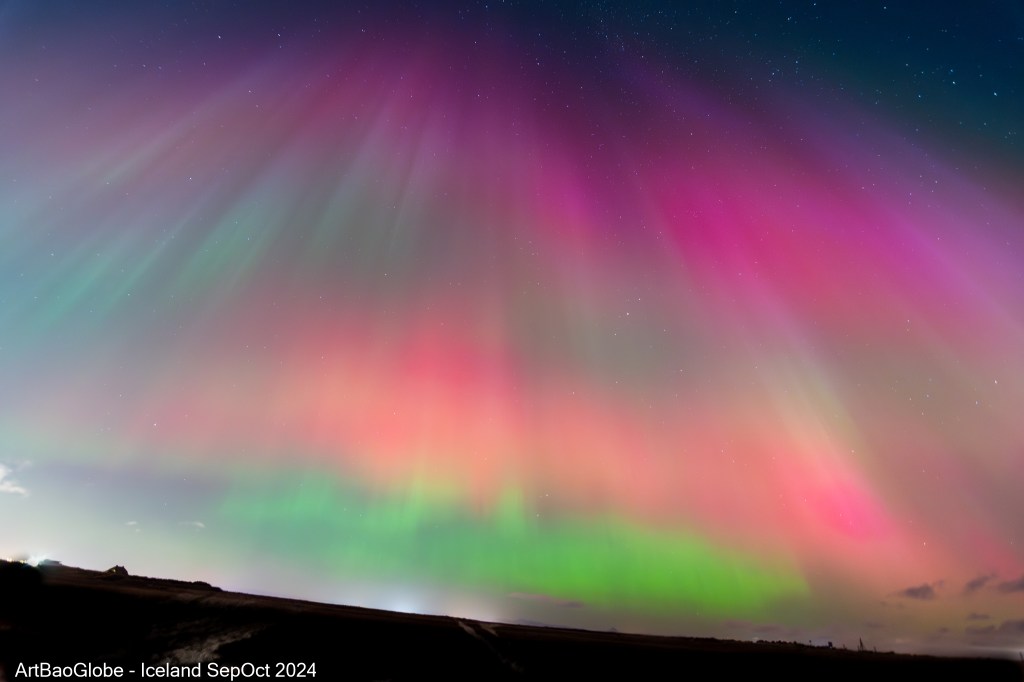
- Corona : most dramatic, bursting outward from a single point, as if the whole sky is exploding in light
Depending on where you stand and your viewing angle, the same aurora can look completely different to each observer.
Witnessing the Northern Lights in person is nothing short of breathtaking. Ribbons of green and yellow dance gracefully across the sky, sometimes faint and diffuse, other times so intense it feels like the heavens are throwing a grand celebration. Shapes shift constantly, weaving curtains, streaks, and bursts that keep you entranced. While cameras can capture the full spectrum of colors, the naked eye still experiences an unforgettable spectacle.
During our two weeks in Iceland, we were fortunate to witness auroras on seven nights. Each display grew more dramatic, as though nature was building up to its grand finale.
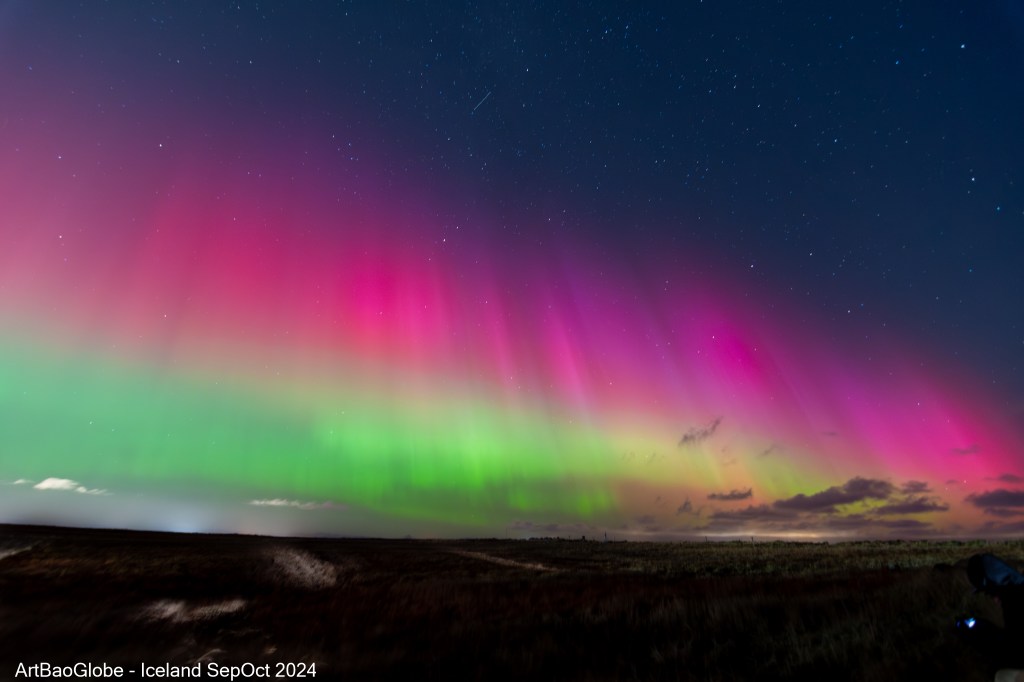
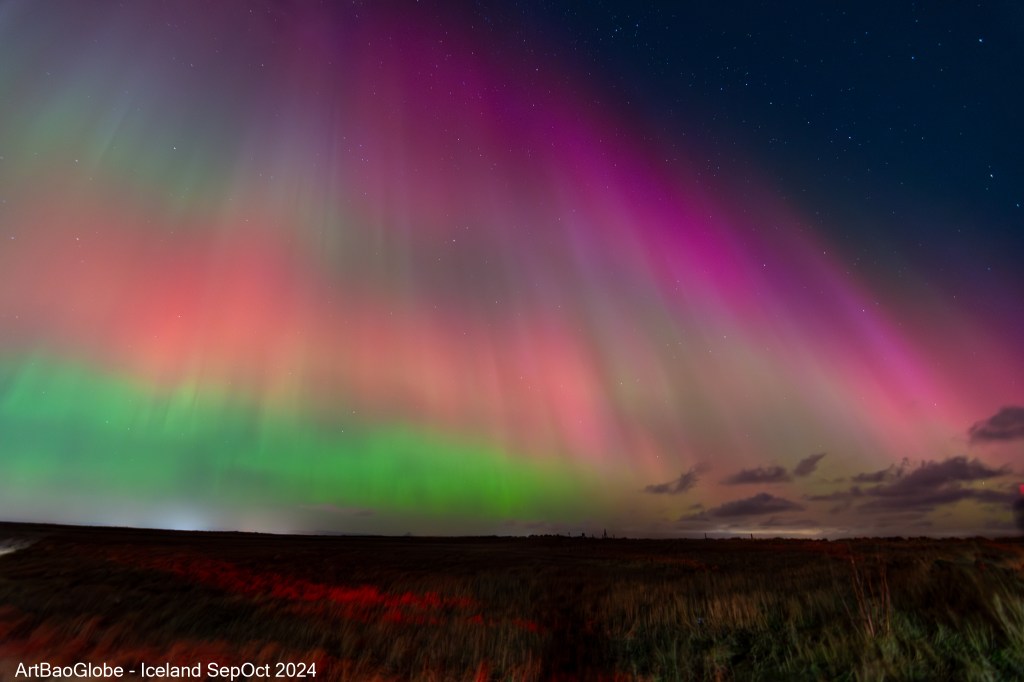
The highlight came on 10 October 2024, when we saw the rare Red Aurora with our own eyes. It was said to be the second most intense aurora of 2024, and even of the decade, an unforgettable gift from the Arctic sky.
29 September 2024 : Our very first encounter with Aurora at Snaefellsnes Peninsula

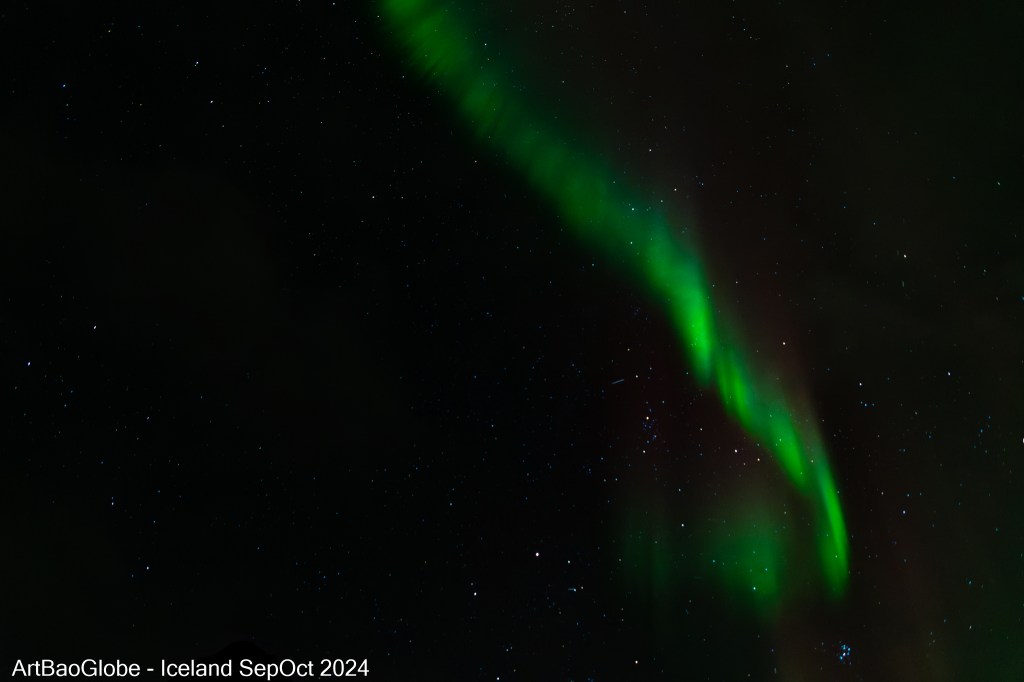
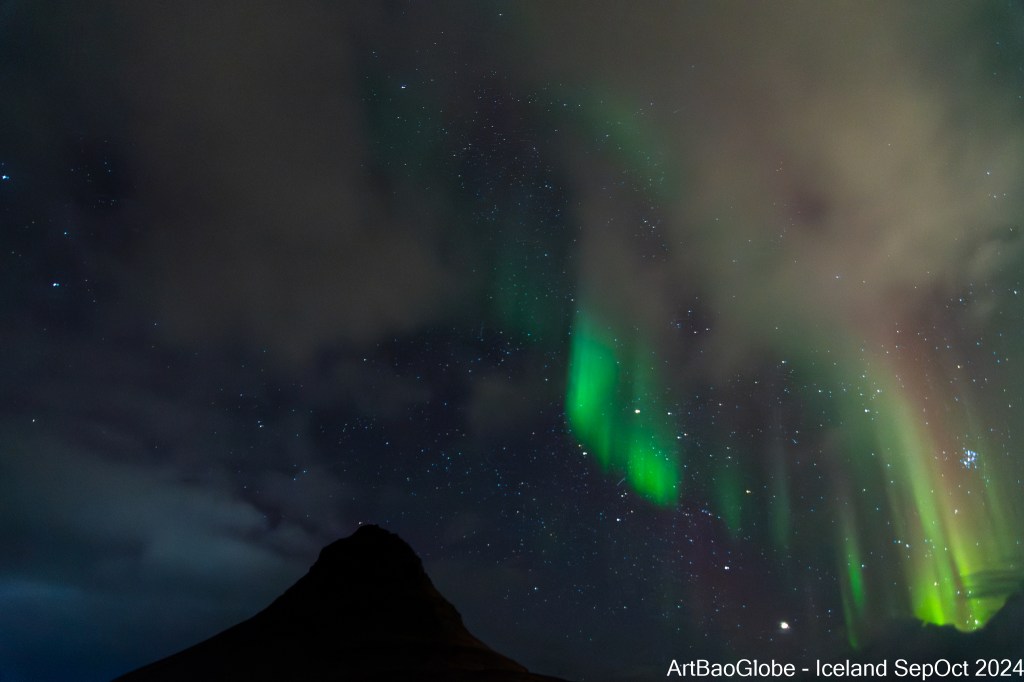
3 October 2024 : short and sweet lights at Lake Hotel Egilsstadir
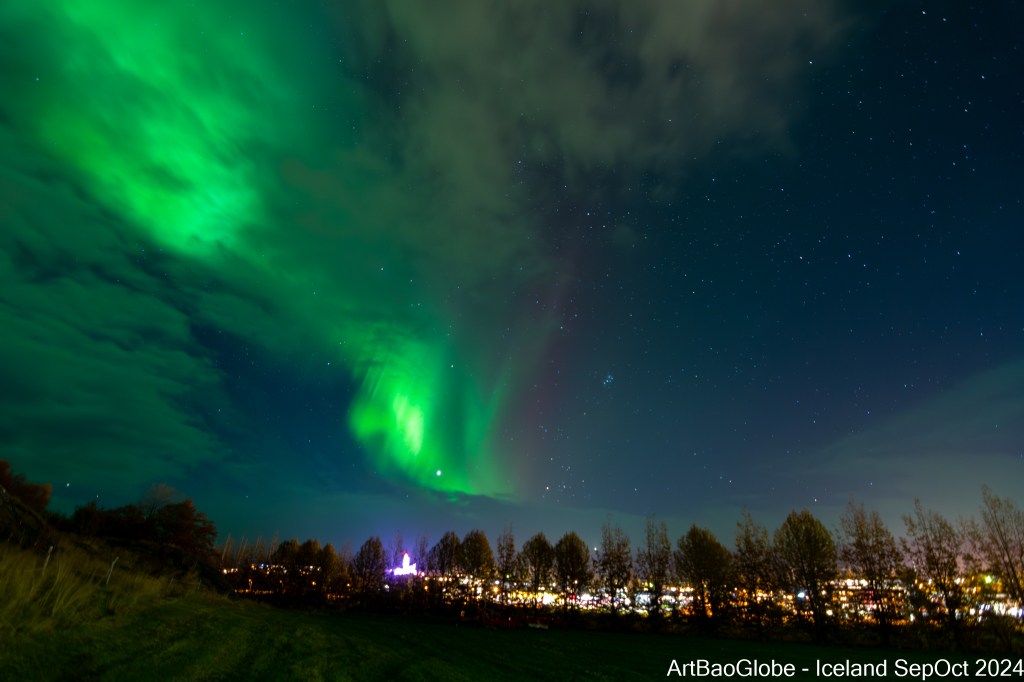

5 October 2024 : Well perform Aurora at Fosshotel Glacier Hotel


6 October 2024 : Yet another level of impressive show at Vik
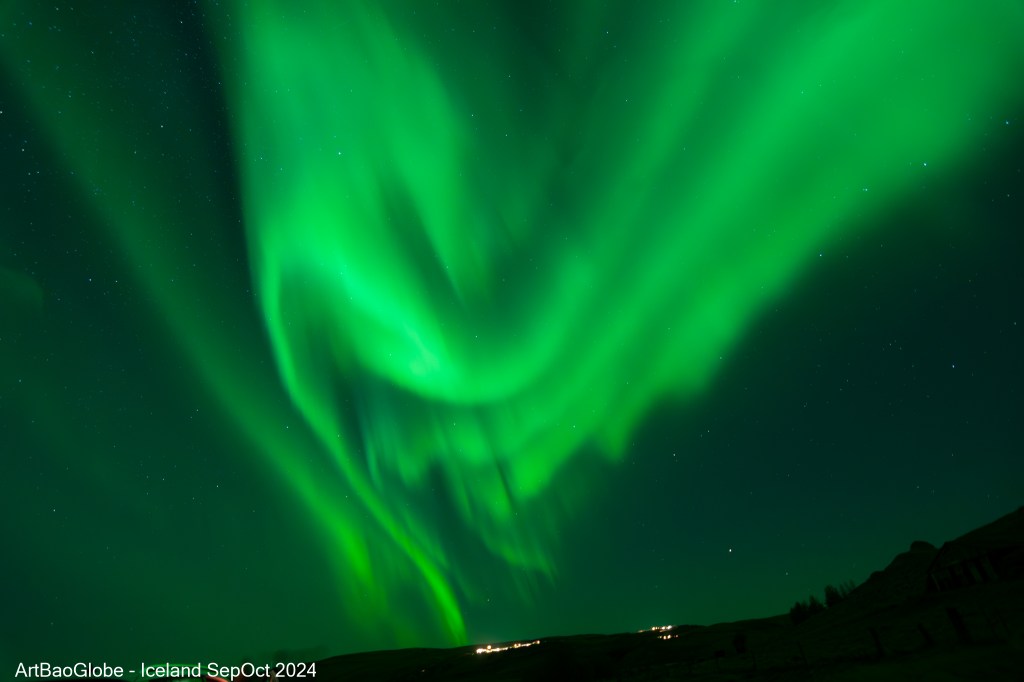
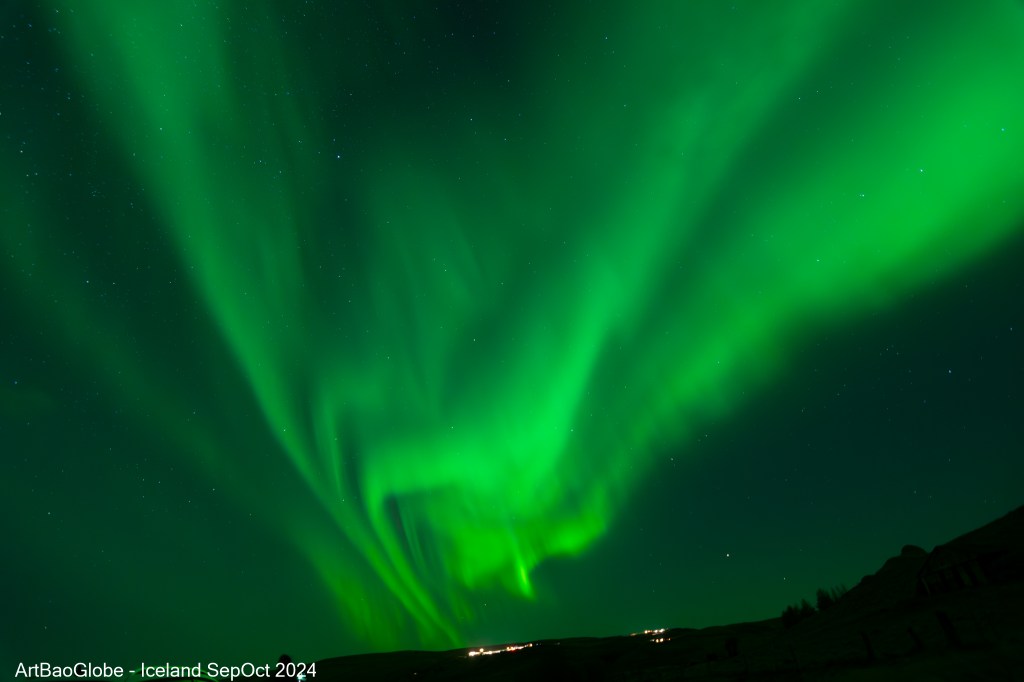
7 October 2024 : Dancing Queen Party across the southern Iceland


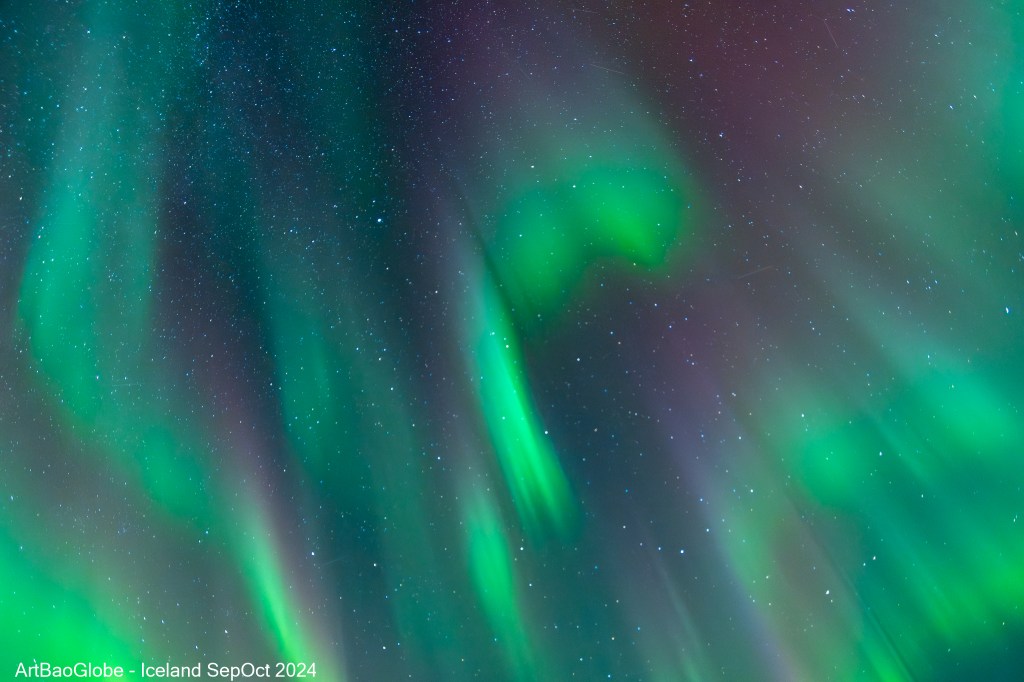
8 October 2024 : Another jaw-dropping display at Hotel Gullfoss


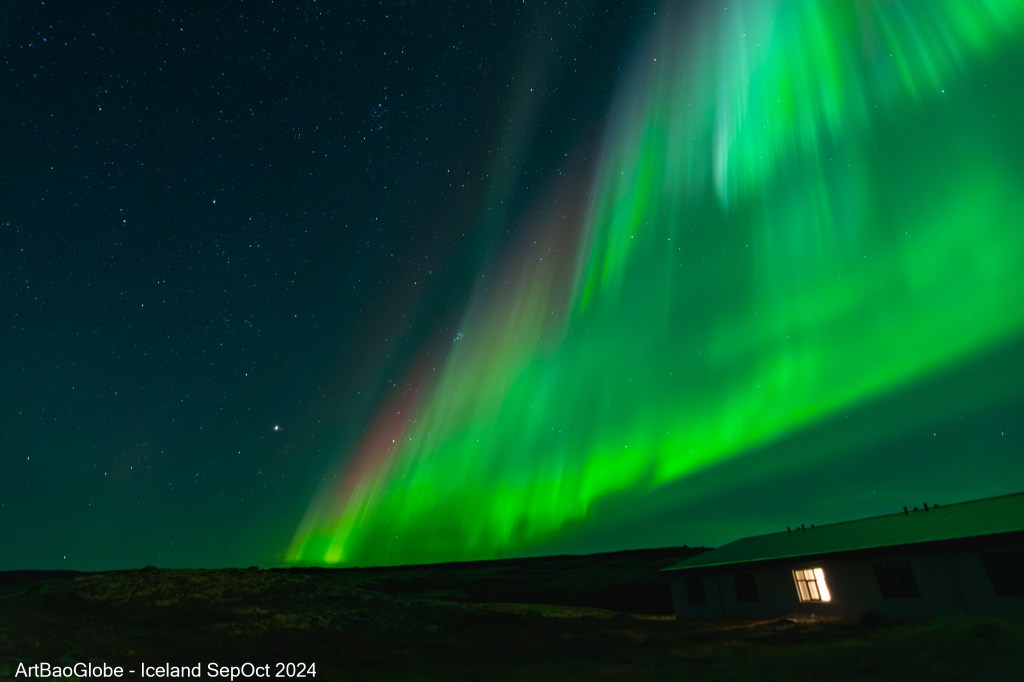

10 October 2024 : The ultimate red Aurora at Reykjavik
The wind was fierce and biting, but arriving early turned out to be a blessing. Soon, streams of cars began pulling in, and the road grew crowded with eager aurora chasers. Then, without warning, the sky lit up, a brilliant red aurora suddenly appeared right in front of us. It was breathtaking, almost surreal, to stand there in the freezing wind, watching the wavy red pink curtains dance across the dark sky. To witness one of the most spectacular auroras of the decade with our own eyes was beyond words, an unforgettable gift in Iceland.

 Art Bao Globe